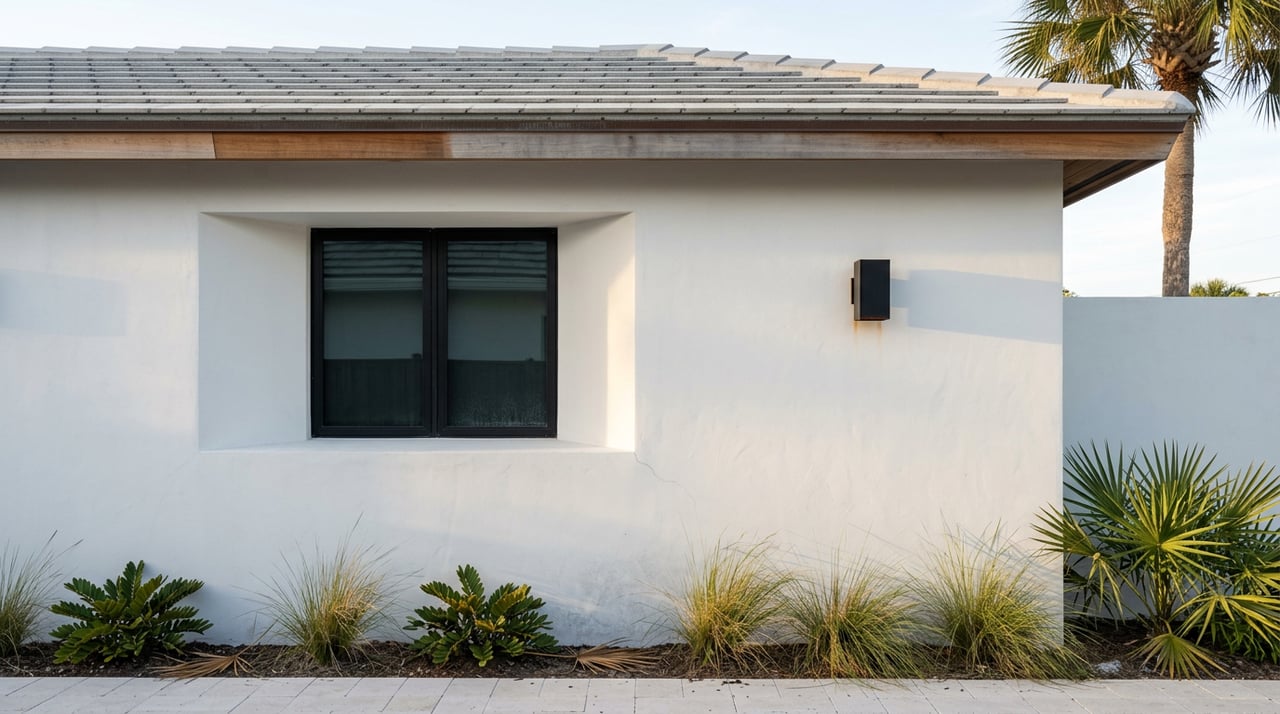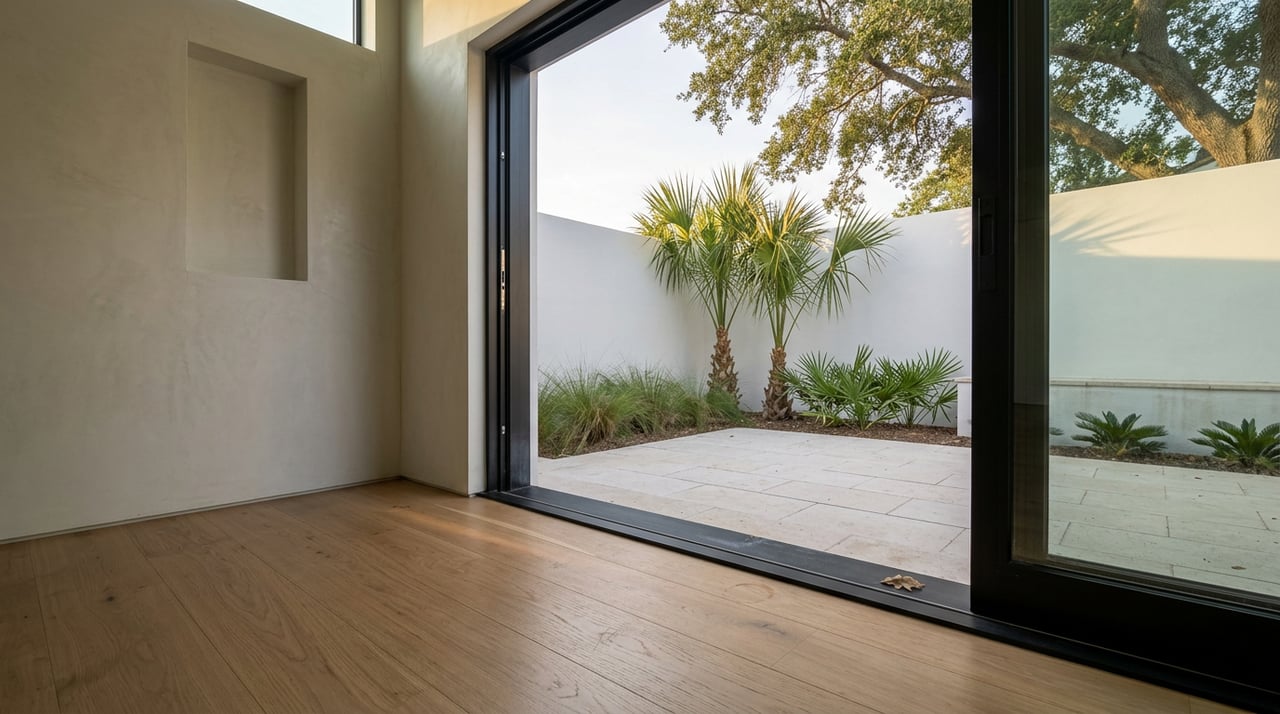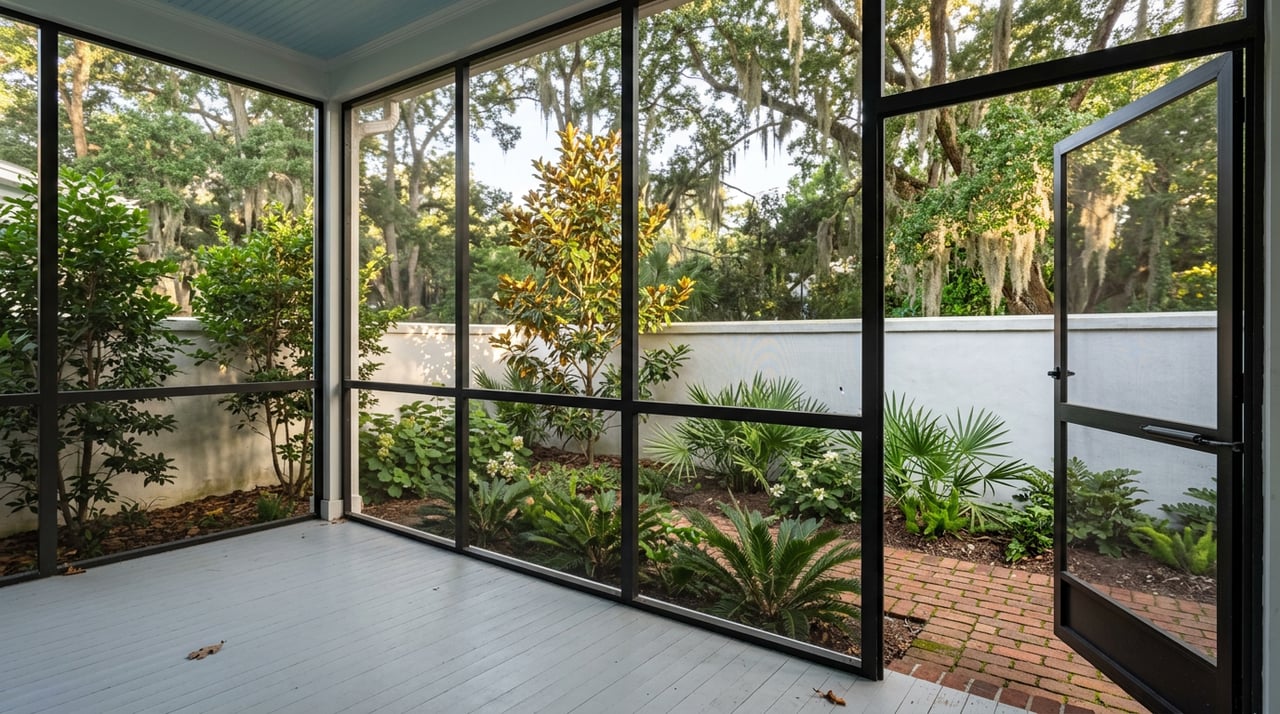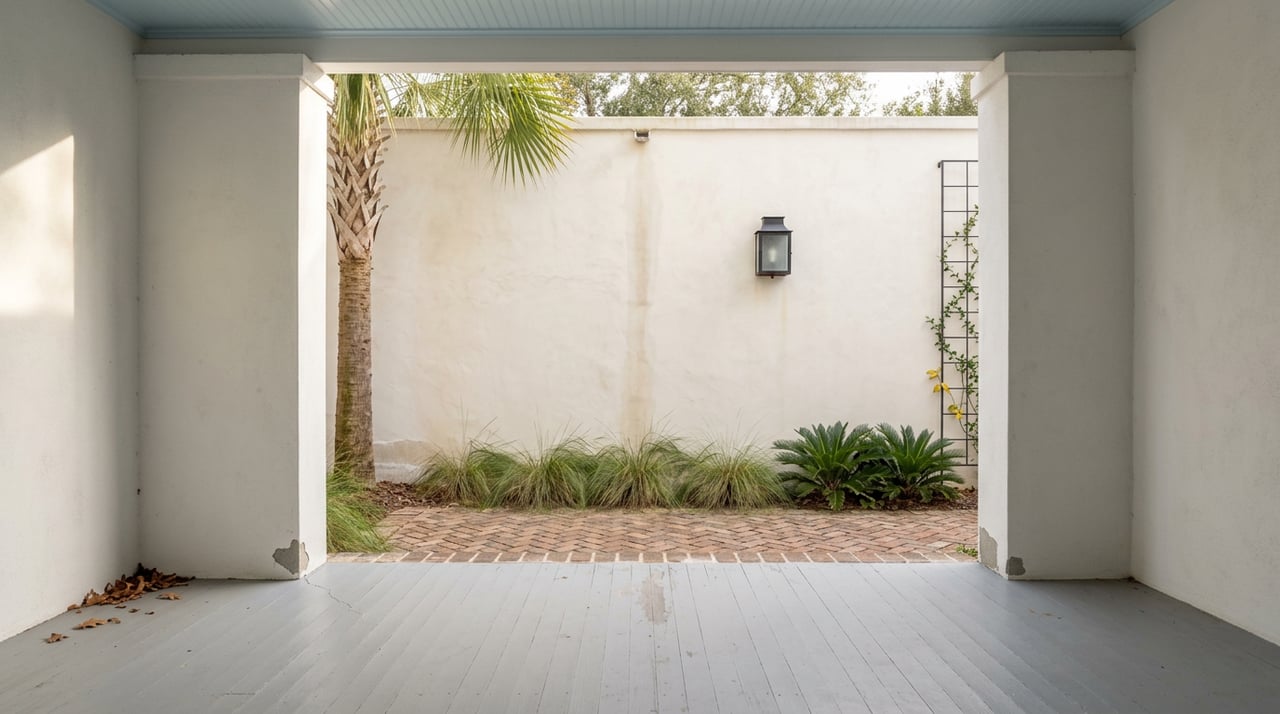
Ask a Rosemary Beach owner what it takes to swap a front door or add a window box, and the answer catches most newcomers off guard. A licensed design professional has to draw it up. The Architectural Review Board has to approve it. And the owner is out roughly $500 to $1,500 in fees before a single hammer swings. Repainting the house the exact color it already is still requires a submittal.
This is not bureaucracy for its own sake. It is the same rulebook, known inside the community as the Pattern Book, that helps explain why Rosemary Beach's real estate has been behaving differently from the rest of Scenic Highway 30A all summer, and not in the way most buyers assume.
The numbers that don't add up on their own
As of July 20, 2026, Rosemary Beach carried 14 active listings, a median list price of $3,620,000, and an average price of $1,668.60 per square foot. A week later, on July 27, 2026, the broader 30A corridor showed 744 active listings, a median list price of $2,139,500, and an average of $996.96 per square foot.
| Rosemary Beach (July 20, 2026) | 30A corridor-wide (July 27, 2026) | |
|---|---|---|
| Active listings | 14 | 744 |
| Median list price | $3,620,000 | $2,139,500 |
| Average price per sq ft | $1,668.60 | $996.96 |
| Average days on market | 139 | 121 |
That price gap is not the story. Rosemary Beach has commanded a premium over the rest of the corridor for years, and a per-square-foot figure roughly two-thirds higher than the corridor average is consistent with that pattern. The part worth stopping on is the days-on-market column. A market this tight on inventory and this expensive should be moving faster than the corridor around it. Instead, Rosemary Beach listings sat for an average of 139 days against a 121-day corridor average over the same stretch of summer. Fourteen listings took longer to sell than 744.
That is the puzzle this post is built to answer, and the Pattern Book is most of the explanation.
What the Pattern Book actually restricts
Rosemary Beach was master planned by Duany Plater-Zyberk & Company, the firm behind the New Urbanist movement that also shaped Seaside a few miles west. Where DPZ's own project notes describe a deliberate departure from Seaside's approach, favoring masonry and a darker wood-stain palette over pastel clapboard and routing cars through a rear-alley system so garages never became front doors, the result on the ground is a town built to a strict, narrow code rather than an evolving mix of individual builder choices.
New construction is limited to a defined set of predefined building types. Any exterior change, however small, routes through the Architectural Review Board, and that review isn't a rubber stamp for cosmetic updates. It covers window proportions, paver materials, paint colors, and trim details, all specified in the Pattern Book itself.
For a buyer comparing listings, this changes what "days on market" actually measures. In most of the corridor, a home that isn't moving can be freshened up quickly: new paint, updated hardware, a repainted door, and back on the market within weeks. In Rosemary Beach, that same refresh requires a design professional's drawings, board approval, and a fee before work starts. Sellers with an older interior or a slightly dated exterior detail are less able to make a fast, low-cost adjustment to attract a buyer. They wait instead for the buyer who wants the property closer to its original form. That is a slower sales process by design, not a sign of softening demand.
The second mechanism: no public parking for the beach
The Pattern Book explains why supply can't respond quickly. A second, less obvious rule explains why demand for what does sell stays firm: Rosemary Beach has no public parking for beach access.
The town has nine numbered walkovers in total, labeled A through I and maintained by the Rosemary Beach Property Owners Association. Two of the nine, at the Western Green and the Eastern Green, sit at the town's widest civic lawns and read as the grander, more public-feeling entries. The rest are smaller, single-path accesses tucked between homes. None of the nine come with a parking lot. There is no place where a visitor can pull in and walk straight to the sand.
That detail matters more than it sounds like it should. In communities where the beach is reachable from a public access lot, the walk-to-beach premium gets diluted by outside foot traffic on any given Saturday. In Rosemary Beach, the only people using those nine walkovers are people who are already inside the gate, either owners or guests renting from an owner. The scarcity of casual access protects the quiet, uncrowded guest experience that supports premium nightly rates, which in turn supports the price a buyer is willing to pay for a rental-ready property.
What this means for underwriting a purchase
Put the two mechanisms together and the pricing behavior stops looking like a puzzle. Supply can't expand or refresh quickly because of the Pattern Book. Demand for the walk-to-beach experience doesn't get diluted because there's nowhere for outside traffic to park. Together, that supports a floor under prices even while the property itself takes longer to find its buyer.
For a buyer, that combination changes how a purchase should be underwritten rather than whether it's a good idea.
Budget renovation friction into the timeline, not just the cost. A front door replacement or a set of window boxes can run $500 to $1,500 in architectural fees alone before construction begins, and that's before the board's review adds time to the calendar. If a property needs cosmetic work before it will show well or rent well, plan for a longer runway than the same project would take elsewhere on 30A.
Carrying costs run higher here than inland Florida, and higher than some of the rest of the coastal corridor. Annual insurance on a property in the $1.5 million to $3 million range commonly runs $12,000 to $25,000, a figure worth confirming against the specific parcel before closing rather than after.
If the plan includes short-term rental income, budget for the approval sequence, not just the tax rate. The Rosemary Beach Property Owners Association requires written approval before an owner can list a home short-term, in addition to Walton County's Short-Term Vacation Rental Certificate, which involves an application and a safety inspection with fees ranging from $294 for a studio to $663 for a five-bedroom or larger home. Combined lodging taxes in South Walton typically land near 12 percent once state sales tax, the local surtax, and the county's tourist development tax are added together. None of that is unusual for the corridor. What's specific to Rosemary Beach is that the HOA approval has to clear before the county certificate matters, and that sequencing takes real calendar time.
The premium isn't paying for prestige alone. It's paying for a set of rules that keeps the supply slow to change and the beach experience uncrowded. Both of those are structural, not seasonal, which is why they didn't move with the rest of the corridor's summer slowdown.
Financing conditions are part of the corridor-wide picture too. Freddie Mac reported the 30-year fixed mortgage rate at 6.43 percent as of July 2, 2026, down slightly from the prior week and below the 6.67 percent recorded the same week a year earlier. That modest easing has given corridor-wide buyers a bit more room to negotiate on the properties that are sitting longest, which is part of why inventory across all of 30A has grown even as Rosemary Beach's has stayed thin.
FAQ
Does the Architectural Review Board review interior renovations, or only what's visible from the street?
The board's authority centers on exterior changes, the details the Pattern Book specifies: window proportions, paver and paint materials, and trim. Interior work generally moves through the standard county building permit process rather than ARB review, but any project that touches the exterior envelope, including something as small as a new front door, should be confirmed with the Property Owners Association before it's scoped.
Is Rosemary Beach a reasonable fit for a short-term rental purchase?
It can be, but the approval sequence deserves attention before an offer goes in. A buyer needs written HOA approval to operate a short-term rental in addition to the Walton County Short-Term Vacation Rental Certificate, and the HOA step should be confirmed as part of due diligence rather than assumed. Once approved, the same scarcity that limits public beach access also tends to support the guest experience that drives premium nightly rates.
If you're comparing Rosemary Beach against another point on the corridor and want to know how these rules apply to a specific property, LaFlure & Vice can walk through the Pattern Book's practical implications and the current inventory before you write an offer. Request a personalized consultation to start the conversation.