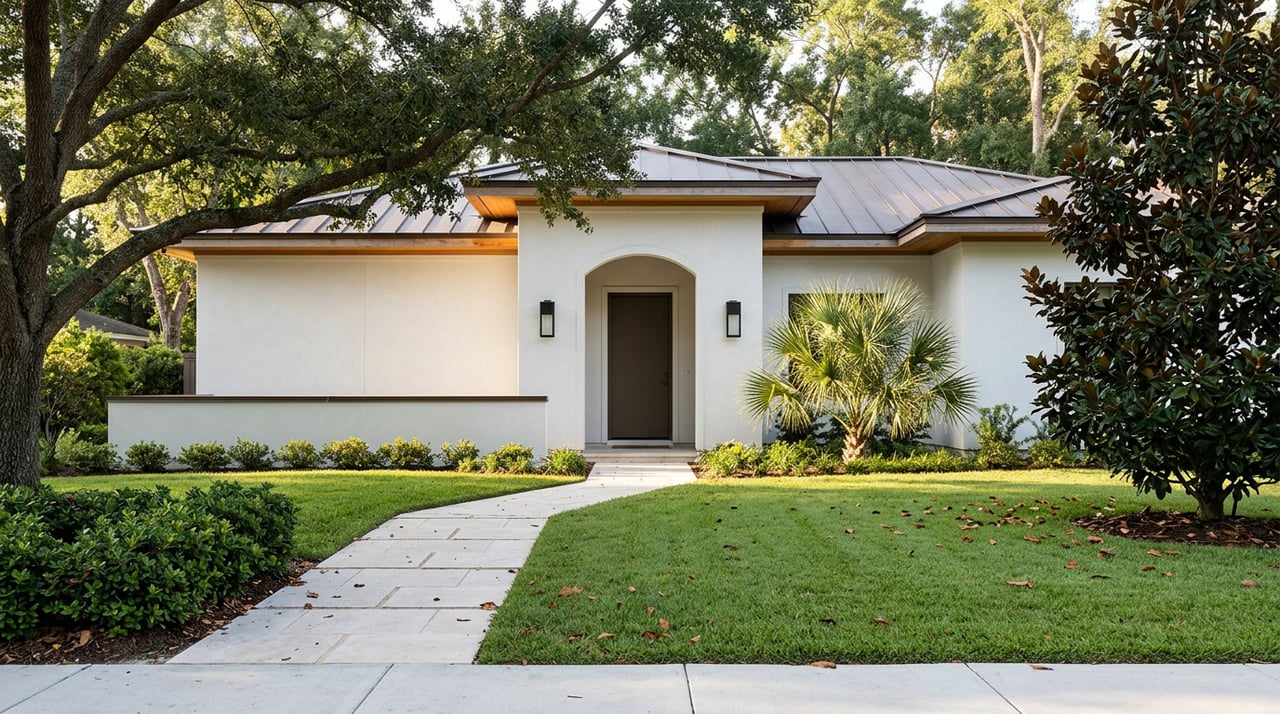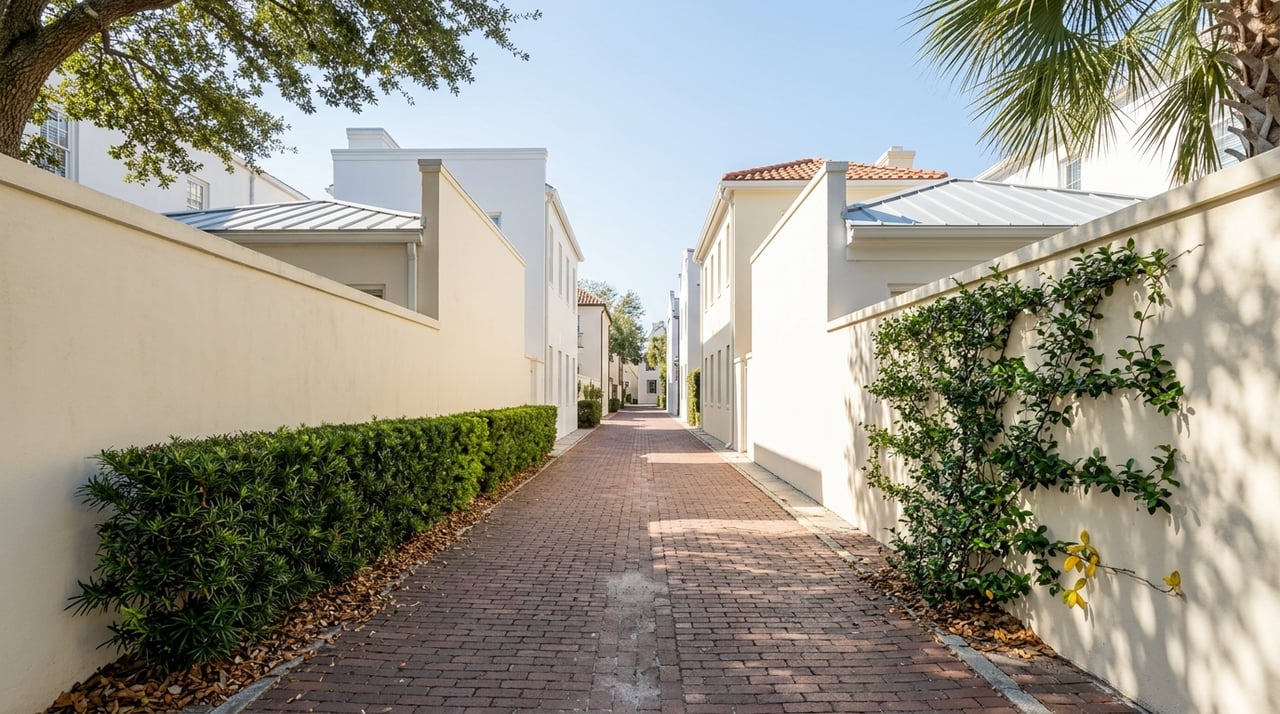
Ask anyone shopping for a rental property on 30A where to look, and Inlet Beach comes up fast. It carries a reputation as the value play, the eastern gateway, the town without Rosemary Beach's Design Review Board standing between a buyer and a booking calendar. That reputation is earned. It's also incomplete.
Inlet Beach isn't one rental market. It's a dozen small ones, each governed by a document most buyers don't ask to see until after they've already fallen for the house. A buyer who assumes "Inlet Beach" answers the short-term rental question the same way at every address can end up holding a state license, a county certificate, and a home in a community that won't let them host a guest for anything under six months.
The County Says Yes
At the county level, Inlet Beach's rental posture really is straightforward, at least on paper. Any property rented more than three times a year for stays under 30 days needs a state license from the Florida Department of Business and Professional Regulation, plus a Walton County Short-Term Vacation Rental Certificate registered separately with the county. Add registration with the Walton County Tax Collector to remit the required tourist tax, and the compliance stack is complete: 6 percent state sales tax plus 5 percent county tourist development tax, 11 percent of gross rental revenue before a single operating expense is subtracted.
The annual county certificate runs $300 for an individual owner, or $227 per property for owners inside a registered community program. Updating the managing agent on file costs an extra $125, and swapping the local responsible party costs $25. None of this is optional, and the timing rule is strict: certification has to happen before a property is advertised or rented, not during, not after.
Skip any piece of it and the exposure is real. Walton County can fine up to $500 per day for operating or advertising without a valid certificate, and as of 2026 the county has moved from sending warnings to filing active legal proceedings against non-compliant owners. This is the layer that gets talked about most, because it's the one with a public application portal and a fee schedule. It's also the layer that answers the least important question for a buyer deciding whether a specific house can generate the income the listing implies.
The Address Might Say No
The question the county certificate doesn't answer is whether the community will let you use it. That answer lives inside the HOA declaration, and in Inlet Beach it changes block by block.
| Community | Rental posture |
|---|---|
| Watersound Origins | The area's largest rental-restricted community. Most neighborhoods require leases of six months or longer, built for primary and second-home owners rather than nightly turnover. |
| Treetop Village | Gated community near 30Avenue where homes are routinely marketed to buyers as rental-income properties. |
| The Ivy at Inlet Beach | Listed as suited for either a primary residence or an investor "looking for high returns," language that signals nightly rental use is expected there. |
Communities inside the same stretch of Inlet Beach can land on opposite ends of the rental spectrum, and the name on the entrance sign doesn't predict which side you land on. That fragmentation is itself the mechanism worth understanding. In Rosemary Beach, every rental has to clear the town's own Design Review Board, which means the rule is centralized and a buyer can learn it once and apply it anywhere in town. Inlet Beach has no equivalent single authority. The absence of a town-wide rental board is exactly why the community-level check matters more here, not less. The restriction, when it exists, lives in a governing document you have to go find. It isn't a rule you can look up once and carry from one address to the next.
Walton County's own compliance guidance puts the shift in plain terms: legal, well-managed rentals are welcome and economically vital, but the days of casual compliance are over. That posture applies to every certificate holder in the county. It says nothing about what the HOA down the street from your closing table has already decided on its own.
What Changed in 2026
The county side of this picture also moved this year, and the timing matters for anyone closing on an Inlet Beach property right now. Since February 1, 2025, every short-term vacation rental in Walton County has needed annual registration under the county's Board of County Commissioners resolution. Then, in a February 3, 2026 announcement, the county said it would align that local renewal schedule with the state DBPR licensing cycle. Starting with the 2026-2027 renewal period, every short-term rental outside the 32459 Santa Rosa Beach zip code, which covers Inlet Beach's 32461, moves to a unified June 1 renewal deadline, with the application window opening each April 1.
Anyone buying in Inlet Beach this year is closing in the middle of that transition. The renewal date that applied to the seller's certificate may not be the one that applies to yours, and the responsibility to confirm it falls on the buyer, not the county.
A second change lands on the same calendar. Starting January 1, 2026, rental signage must display the county's official compliance hotline number, a requirement layered on top of existing signage rules about maximum occupancy and parking. Combined with the county's move from warnings to legal action, the direction is clear. Oversight is tightening, not easing. A rental posture that looked informal in 2023 is now a compliance line worth underwriting before you close, not something to sort out afterward.
What to Put in the Contract, Not in the Conversation
The fix for all of this isn't complicated, but it has to happen before the offer, not during the inspection period.
- Request the full CC&Rs and any rental rider or rules-for-renters addendum before you write an offer, not after.
- Confirm the DBPR license and Walton County certificate number tied to the specific address, independent of what the listing or the seller tells you.
- Ask which renewal cycle currently applies to that property and who is responsible for the next renewal date after closing.
- Check whether the HOA requires participation in an approved rental management program as a condition of renting at all.
- Ask for the association's amendment history and whether any rental-rule changes are pending a vote.
- Get the minimum-stay language and any rental-week caps in writing rather than relying on a verbal description of "what everyone does."
One narrow exception is worth knowing. Florida's state preemption law protects properties that were renting short-term continuously before June 2011, even in communities that later banned the practice for everyone else. It's a rare case, but it's the kind of detail a title search and a conversation with the association can confirm quickly, and it's worth ruling in or out before you close.
FAQ
If a home is currently operating as a legal short-term rental, does the certificate transfer to me at closing? Not automatically. Walton County's registration lists the property owner as the applicant of record, and updating the responsible party carries its own $25 fee, separate from the $125 charge to change a managing agent. Confirm directly with the county what's required before you assume day-one rental income.
Does buying in a rental-friendly Inlet Beach community protect me from future rule changes? No. HOA covenants can be amended by a vote of the association after you close. A community's current posture is a snapshot, not a guarantee. Ask for the amendment history and whether any rental-rule changes are pending before building a pro forma around today's rules.
Is Inlet Beach still less regulated than Rosemary Beach? At the town level, yes. There's no single design review board approving every rental the way there is in Rosemary Beach. But at least one of Inlet Beach's own master-planned communities, Watersound Origins, enforces a restriction every bit as strict, requiring long-term leases in most of its neighborhoods. The difference is where the rule lives, not whether one exists.
What's the actual penalty for renting without a valid certificate? Up to $500 per day for advertising or renting without a valid Walton County certificate, and the county has been explicit that as of 2026 it is pursuing legal proceedings rather than leading with warnings.
None of this is a reason to avoid Inlet Beach. It's a reason to read the HOA packet before the listing photos. The county will tell you what's legal everywhere. Only the association will tell you what's allowed at that address.
At LaFlure & Vice, we pull the CC&Rs, the certificate history, and the renewal calendar before a client writes an offer, not after they've already fallen for the pool. Request a personalized consultation and let's find the Inlet Beach address where the rental answer is already yes.